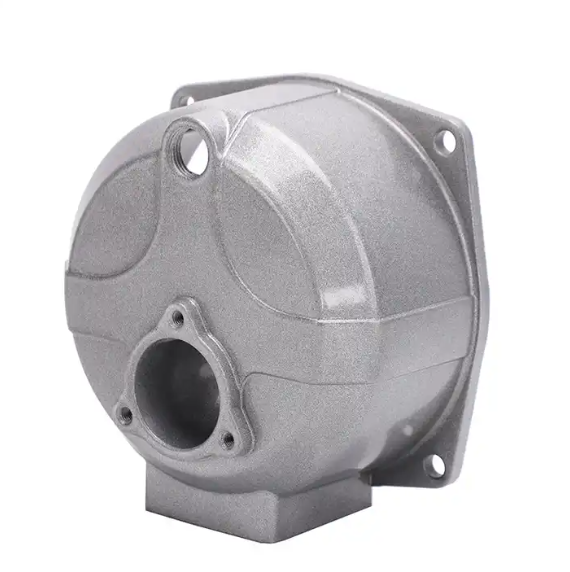
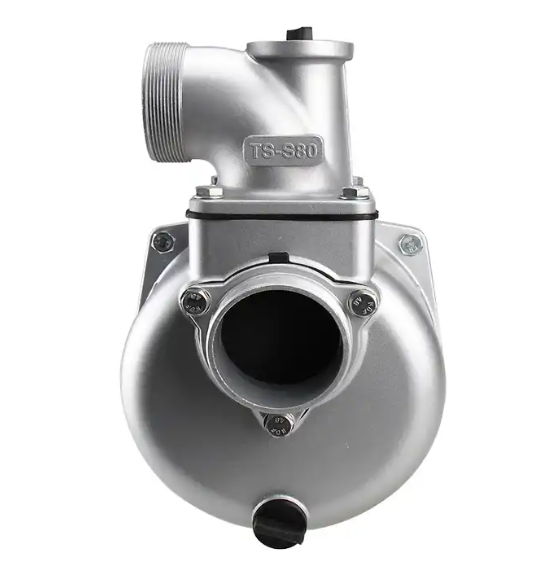
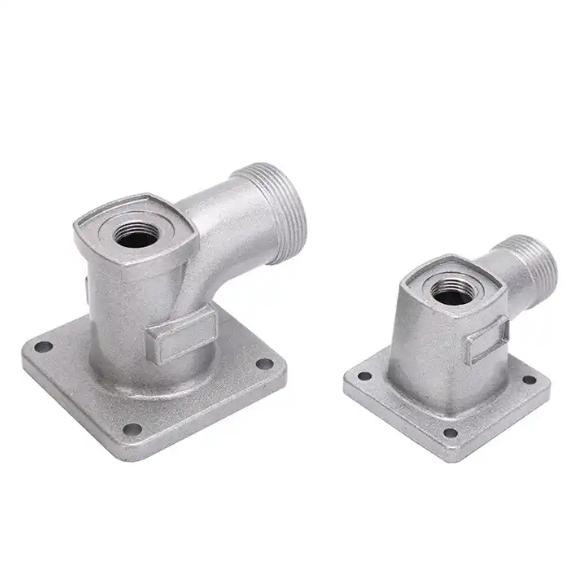



Custom stainless steel manifolds, connectors, valve bodies, fittings, brackets and flow-control components for CDUs, cold plates and rack-level coolant distribution. Components are engineered from customer drawings with attention to interfaces, sealing, cleanliness and corrosion resistance.
Hengke Casting operates under ISO 9001 and IATF 16949 quality systems and supports applicable BV, DNV and PED documentation requirements for customer projects.
AI liquid-cooling stainless steel accessories connect, distribute, seal and monitor coolant throughout high-density computing infrastructure. Drawing-based castings combine complex flow passages with precise assembly interfaces.
| Component Types | Manifolds, connector bodies, valve bodies, fittings, brackets and sensor housings |
| Materials | 304, 316, 316L, CF8 or CF8M stainless steel to the approved specification |
| Manufacturing | Investment casting, CNC machining, fabrication and assembly as required by the drawing |
| Interfaces | Custom ports, threads, sealing grooves, flange faces and mounting points |
| Surface Treatment | Pickling, passivation or electropolishing according to project requirements |
| Inspection | Material verification, critical-dimension inspection, surface checks and agreed leakage or pressure tests |
| Documentation | Material certificates, dimensional reports and test records when specified |
| Applications | CDUs, cold plates, rack manifolds and data-center liquid-cooling distribution loops |
Investment casting can consolidate several passages, bosses and mounting features into one part, reducing joints and potential leak paths. CNC machining controls sealing faces, threads and connection geometry. Passivation, polishing and controlled cleaning are available by specification.
Send drawings, material grade, coolant, pressure, temperature, tolerance, testing and quantity requirements for a manufacturing review.



Liquid-cooling accessories must match the system interface as well as the operating environment. We review threads, ports, sealing grooves, wall thickness, mounting points and cleanliness requirements before confirming the manufacturing route. Depending on geometry, parts can be investment cast, CNC machined, fabricated and assembled. Inspection plans can include material traceability, critical-dimension reports, surface-condition checks and agreed leakage or pressure testing.


